The evolution of Arbutus Medical offers a compelling illustration of how context-driven innovation in the Global South can influence health systems and policy environments in high-income countries. Originating from clinical practices in Uganda—where surgical teams adapted hardware drills to perform essential trauma procedures—the idea for a low-cost, sterilizable drill cover was formalized through collaboration with engineering researchers at the University of British Columbia. This partnership led to the development of a frugal surgical tool designed specifically for resource-limited settings.
Over time, the product gained regulatory approval in Canada and has been deployed in remote and Indigenous communities. Its trajectory aligns with the concept of reverse innovation, whereby solutions developed in low-income environments are transferred and adapted to meet the needs of high-income countries (Govindarajan & Trimble, 2012; Tilley & Bwana, 2019). In doing so, Arbutus Medical challenges traditional models of innovation that presume a unidirectional flow from North to South.2012; Tilley & Bwana, 2019).
Engineering for Impact: Frugal Design and Global Deployment
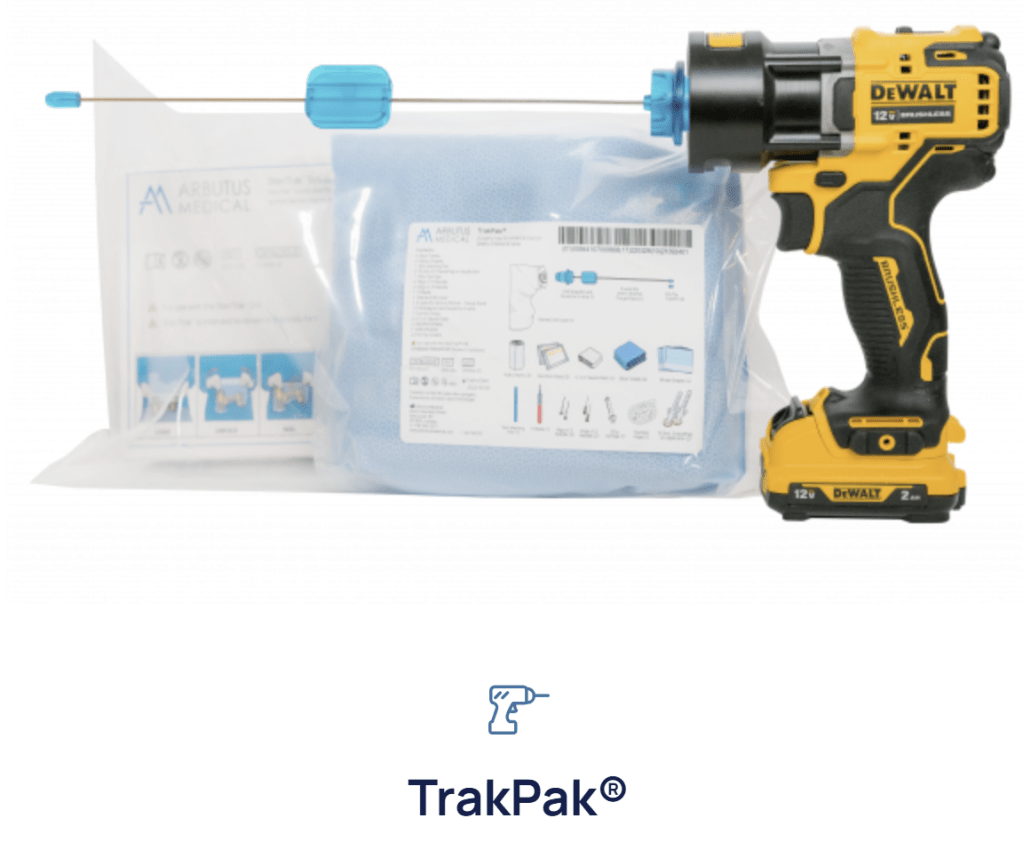
At the heart of Arbutus Medical’s offering is a sterilizable casing that converts a standard hardware drill into a surgical-grade orthopaedic tool. This solution reduces the cost of surgical drilling equipment by over 90%, lowering the entry point for safe surgical care from approximately $30,000 to under $400 (Govindarajan & Trimble, 2012).
The tool was intentionally designed with a focus on accessibility, reuse, and sterilization—key features for both LMIC contexts and remote Canadian health centres. This kind of product exemplifies the principles of frugal innovation: low cost, high functionality, and user-centred design. The broader application of such devices across humanitarian missions, military operations, and Canadian provincial health services indicates both versatility and scalability.
Canada’s Policy Environment: Enabling Scalable, Inclusive Innovation
Canada’s public healthcare model, constrained by fiscal limits and equity mandates, presents a conducive environment for adopting frugal, high-impact innovations. Procurement challenges in northern and Indigenous communities have opened space for affordable technologies that enhance both access and efficiency. Arbutus Medical’s tools meet these demands while also contributing to SDG 3 (Good Health and Well-being) and SDG 10 (Reduced Inequalities).
Furthermore, the relatively low environmental footprint of these tools—owing to their simplicity, modularity, and reusability—makes them relevant within sustainable public procurement frameworks. Though healthcare is not typically at the centre of environmental policy discourse, innovations such as these offer secondary environmental benefits, aligning with the broader goals of Canada’s climate and circular economy strategies.
Global Innovation Governance and Diplomacy
Arbutus Medical’s development reflects evolving global innovation dynamics in which co-creation, licensing, and regulatory harmonization occur across borders. The company’s model exemplifies a distributed innovation value chain, with early insights and prototypes emerging in Uganda, refinement and certification in Canada, and deployment across diverse global contexts.
This model highlights a shift from traditional donor-recipient paradigms to one of mutual capacity-building and innovation diplomacy. It also aligns with OECD calls for more inclusive innovation systems that recognize and incorporate contributions from low-income settings (OECD, 2023).
Pedagogical Implications for GLA2029H: The Sustainability Imperative
For students of GLA2029H: The Sustainability Imperative, Arbutus Medical provides a concrete case study that illustrates the intersection of health innovation, sustainability, and global public policy. It demonstrates how a single product can traverse multiple domains—clinical need, regulatory science, procurement policy, and international cooperation—while supporting the learning goals of the course.
The case is particularly well suited to discussions around:
- Integrating sustainability principles into public sector decision-making;
- Evaluating SME-led innovations for potential funding under multilateral environmental programs such as the Global Environment Facility (GEF);
- Understanding how global governance structures respond to innovation flows from the Global South.
References
- Arbutus Medical. (2025). Company Profile and Reports. Retrieved from: www.arbutusmedical.ca
- EurekAlert! (2020). Sterilizable Drill Cover from Uganda Makes Global Surgical Impact. Retrieved from: https://www.eurekalert.org/news-releases/791046
- Govindarajan, V., & Trimble, C. (2012). Reverse Innovation: Create Far from Home, Win Everywhere. Harvard Business Review Press.
- OECD. (2023). Enabling Innovation in SMEs for a Sustainable Future. Paris: Organisation for Economic Co-operation and Development.
- Tilley, E., & Bwana, M. (2019). Designing for Impact: Lessons from Frugal Innovation in African Healthcare Technologies. African Journal of Science, Technology, Innovation and Development, 11(4), 543–555.
- Global Environment Facility. (2024). GEF-8 Programming Directions: Health Systems and Climate Resilience.


Leave a Reply